
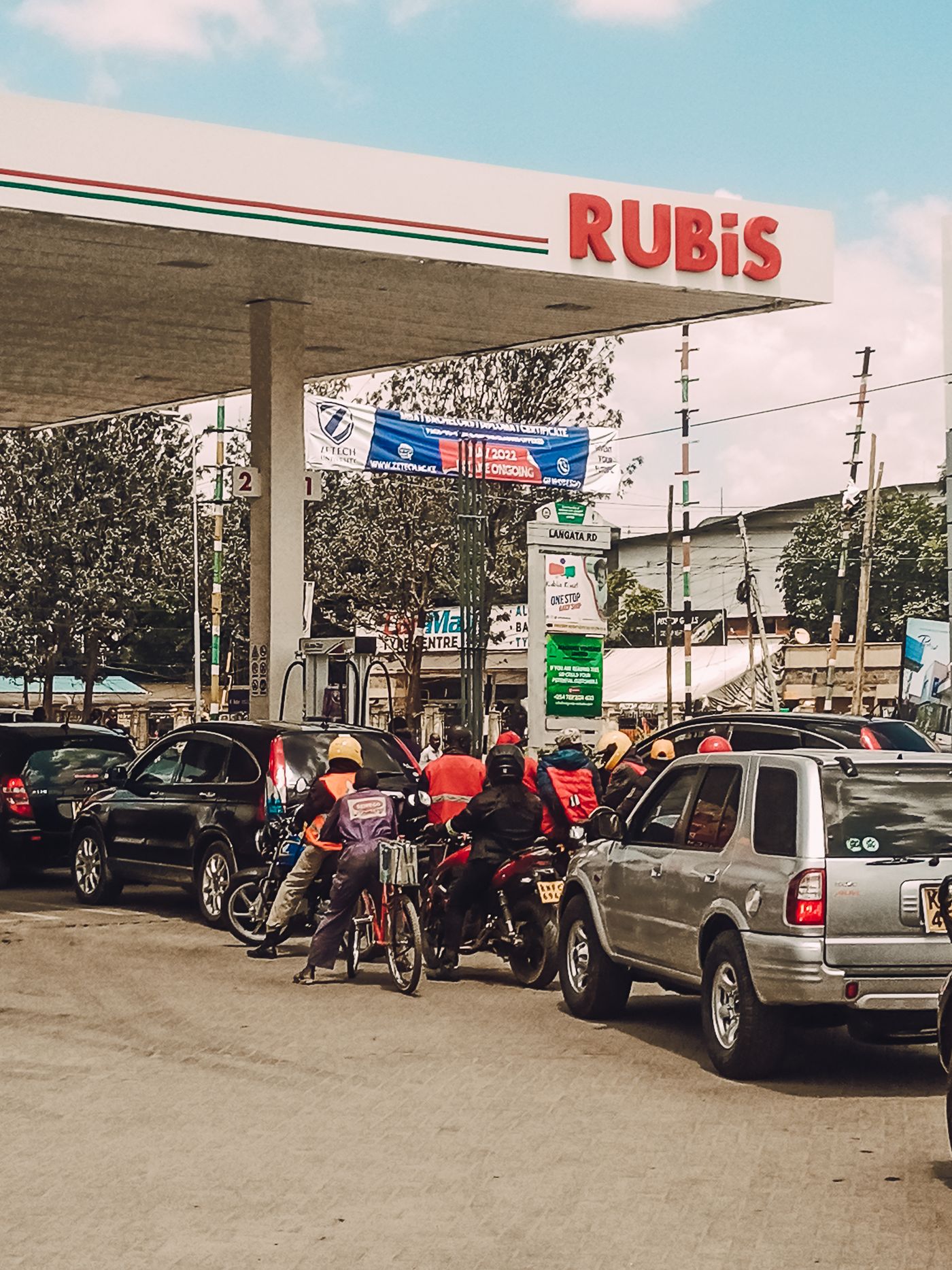
Short answer: KRA requires fuel stations to integrate their sales and forecourt workflow with the dedicated eTIMS Fuel Station System. The official deadline was 30 June 2025, so stations should now treat integration as a current compliance requirement, not a future project.
Why Fuel Stations Have a Dedicated eTIMS System
A forecourt handles frequent, time-sensitive transactions across pumps, attendants, POS terminals, mobile payments, fleet or loyalty accounts, and receipt printers. Manually creating a separate electronic invoice after each sale would slow service and make reconciliation unreliable.
KRA's fuel-station solution is designed to connect electronic invoicing to the station's existing automation so transaction data can move to eTIMS with less re-entry and fewer manual errors.
What the Integration Connects
Forecourt controller
Captures dispensing activity and provides the transaction foundation for pump sales.
Sales or fuel system
Connects product, quantity, pricing, customer, tax, and station records.
POS and payments
Coordinates cashier activity, mobile money, and other payment workflows with the sale.
Receipt printer
Produces the customer-facing receipt after the electronic invoicing workflow completes.
Customer programs
Supports buyer PIN capture, fleet accounts, and loyalty workflows where configured.
Tax and reconciliation
Improves invoice accuracy and feeds records into VAT and operational reconciliation.
Current Compliance Position
KRA says implementation began in June 2024 as a phased rollout and that all fuel stations were required to integrate by 30 June 2025. That date has passed. A station that is not integrated should contact KRA and a qualified integrator promptly instead of waiting for another deadline.
KRA's page warns that failure to comply may result in penalties or enforcement action. The exact remediation path will depend on the station's current systems and compliance position.
Integration Options
| Option | Best fit | What to confirm |
|---|---|---|
| Self-integration | Station group with internal engineering and system ownership | KRA specifications, sandbox testing, certification, support, and change management |
| Third-party integration | Station using a forecourt, POS, or fuel-system vendor | KRA verification, supported hardware, rollout plan, service levels, and total cost |
Fuel Station Readiness Checklist
- ✓List every station, branch, pump, forecourt controller, POS terminal, printer, and fuel management system in scope.
- ✓Map cash, card, mobile money, fleet, credit, loyalty, and buyer-PIN transaction flows.
- ✓Confirm the integration records every sale and handles offline invoicing without losing or duplicating transactions.
- ✓Test price, volume, tax, payment, customer, and receipt data from pump event through the eTIMS response.
- ✓Define what attendants and cashiers see when a submission is pending, failed, retried, or completed.
- ✓Reconcile shift totals, pump totals, POS totals, payment totals, and eTIMS invoice totals every day.
- ✓Document support ownership for forecourt hardware, local networking, POS software, the integrator, and KRA escalation.
Why a Normal Invoice App Is Not Automatically Enough
An ordinary phone or web invoice app may issue valid eTIMS invoices for general business sales, but that alone does not prove it meets KRA's dedicated fuel-station integration requirements. Fuel stations need the dispensing and sales workflow connected so every high-volume transaction is captured accurately.
Before buying software, ask the provider to demonstrate the actual forecourt-to-eTIMS flow on the station's hardware and explain its KRA integration status. A product brochure or generic OSCU claim is not a substitute for a tested station implementation.
Where to Get KRA Support
KRA lists eTIMS fuel-station support through +254 711 099 999, timsupport@kra.go.ke, eTIMS Ops at JKUAT Towers in Nairobi, and KRA offices nationwide. Use the contact details on KRA's current page in case they change.
Official sources
Direct KRA guidance used to prepare this guide.

Frequently asked questions
Open a question to read the answer.
Is eTIMS integration mandatory for fuel stations in Kenya?
Yes. KRA's current guidance says all fuel stations were required to integrate by 30 June 2025. That deadline has passed.
Can a fuel station integrate eTIMS itself?
KRA lists self-integration for stations with internal IT capacity and third-party integration through certified integrators for stations that need external support.
Does the fuel station system support offline invoicing?
KRA says the system supports offline invoicing, alongside VAT auto-fill, mobile money, and loyalty-program integration.
How much does fuel station eTIMS integration cost?
KRA does not publish one fixed price. It says cost varies with system complexity, automation level, and the selected integration method.
Last reviewed: June 2026. This guide summarizes current public KRA information and is not tax or legal advice. Confirm unusual cases with KRA or a qualified tax professional.